
Achieving Workplace Comfort For Yourself And Others

Today we’re considering being cozy in your workplace in terms of not just adjusting and settling in but as maintaining a safe, comfortable environment for both yourself and others. Establishing appropriate professional boundaries is a key step in that process. This will allow you to leave your personal problems at the door, which will help to boost your mood. It will also enable you to create stronger relationships with your employers and colleagues, cutting down on potential workday distractions. Working harmoniously produces the best output. In order to let your professional strengths shine the brightest in concert with those of your bosses and co-workers, check out what the pros below have to say about ways to make your workplace comfortable for everyone.
Beverly West at Monster offers up this great method for establishing workplace baselines: “Keep Personal Problems Personal. When you’re preoccupied with personal issues, it’s difficult to concentrate or be happy at work, says Alison Rhodes, a founding partner of The Balance Team. By all means, make sure you have your kids covered in the event of an emergency, but realize that nobody’s personal life is ever going to be completely problem-free. Just as you need to let go of work to enjoy your time at home, it’s important to leave personal worries at home so you can focus and be productive at work.” While we know that you’re only human, and that everyone encounters difficulties, make sure that you’re not divulging too much personal information while on the clock. Especially as your colleagues will need to focus on attending to their own work in addition to maintaining communications with you. And especially during these unprecedented times, your colleagues simply may not have the capacity to provide you with the amount or type of support that you need, as much as they may wish to assist you. Out of respect for your time, as well as that of your workplace community, make sure that you are maintaining strong boundaries while at work, keeping your personal problems personal to the best of your ability so that you can focus on the professional matters at hand.
Speaking of focusing on professional matters, we love this suggestion from Angela Copeland at LiveCareer: “Be Good at What You Do. Your interactions with other people in your office become much smoother when you have a reputation for being good at your job. When people know that they can rely on you to get things done and make them look good, then they tend to value your presence in the office. But remember that being good isn’t just about one thing. In part, it’s about producing high-quality work. However, it’s also about being on time and respectful of the time of others. And when it comes to your work, take credit for your piece and give credit for the pieces other people have helped you with. This is a great strategy for how to get along with coworkers.” Take time to focus on yourself, to think about your own unique workplace strengths and how you might further develop them. Striving to reach the goals you’ve set will provide you with an extra impetus to do your best. And when you’re noticeably good at what you do, others will know that they can depend on you, which will amplify your leadership qualities. As part of this process, make sure you’re acknowledging that every step you take is in sync with the goals of the larger organization beyond you. Acknowledge both your own successes, and the accomplishments of your teammates, as well as making sure that you’re not missing basic steps like meeting deadlines as you tackle workplace tasks.
Instead of thinking of the steps involved with creating a comfortable workplace as stifling yourself, consider practicing these tips as a way to improve both your professional boundaries and your career skill set. If you do need to bring up a personal matter at work, make sure you are first checking in with your colleagues to see if they will be able support you—what you view as a bonding experience might be distracting or even upsetting to them. Now more than ever is a time to not lose focus. Placing your energy into your professional endeavors will allow you to connect with your co-workers in a way that benefits everyone, which is a surefire method for creating a comfortable workplace environment for both yourself and others. Improving your skills will also make difficult days times easier, as you won’t have to worry about making errors while also navigating any situations clouding your day. For sayings to help keep you in a great, collaborative mindset, visit us again tomorrow for our latest Wednesday Wellness: Cozy edition.
Image retrieved from Pixabay under the public domain.
This posting is brought to you by Contemporaries Inc., one of the best temp agencies in Boston MA. Also available for payrolling employees in Boston and Greater Boston
Recent Posts

The Selfless Spirit
Ambition can be a great motivator but your actual actions should not be based on personal gain in the workplace, rather with a selflessness that moves the team and organization forward. This constructive quality over one's ego is one that distinguishes a responsible...

The Team Comes First
Sayings like 'the customer is always right' or 'first' may be rooted in the positive goal of satisfying the customer, but your team should come first. Dede Henley observes in her Forbes article on inspiring teams that "it’s common sense, isn’t it? Fight for your...

Asking the Right Questions: “How might we…”
The way questions are framed can encourage constructive ideas from your team. In a Forbes article on inspiring teams, Dede Henley suggests that starting the questions with, "How might we..." rather can "How do we..." can draw out questions "that get people to expand...

Constructively handle Concerns
There are always reasons to have concerns about a project. In fact, professional project managers will often formally divide these concerns into risk and uncertainty. Some risks can be managed by tracking them and preparing for them. For instance, if your project...

Feeling good on the job starts at home with a good nights rest
Feeling good on the job starts at home with a good nights rest. According to the National Sleep Foundation, "those with excellent sleep health are nearly 3.5 times more likely to report feeling well-rested on a typical weekday than those with poor sleep health." ...

Productivity is a Process
Even when you have effective methods for getting work done, the process of being more productive is an ongoing one. It may be tempting to fall into an "if it ain't broke don't fix it” mindset, but there are usually better ways of doing things. Many simply require...
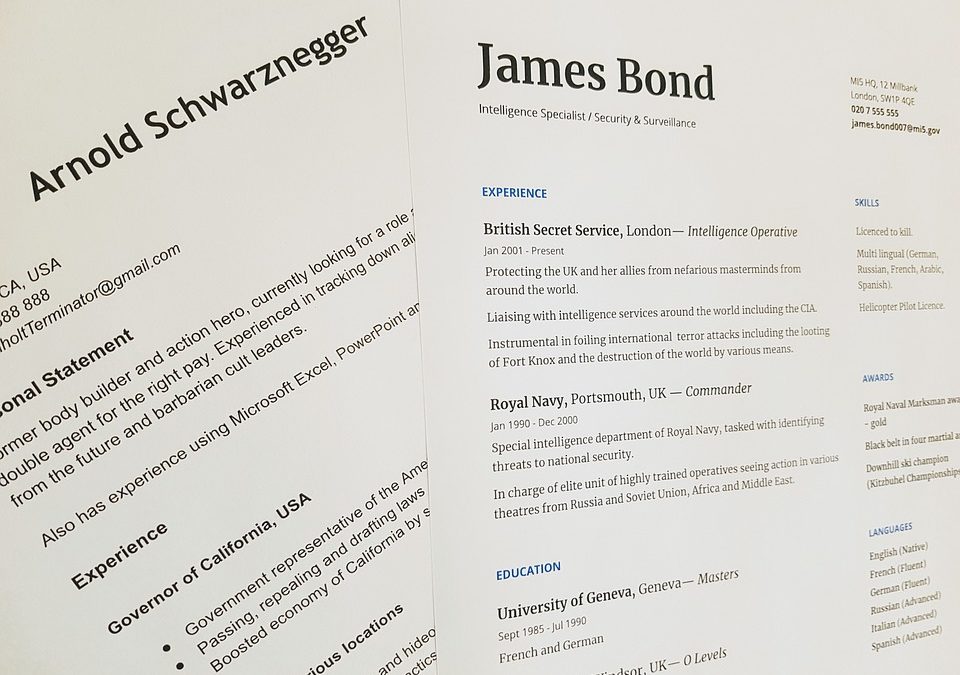
Resume Tips: Keep it Clean, Clear & Simple
When writing your resume, keep it clean, clear and simple. Your prospective employer shouldn't have to riffle through pages or try to decipher your meaning. One clear page is better than several with unnecessary information. A clean resume is a pleasure to look at....

Interview edge? practice common questions
If you are looking to build your confidence before an interview, the surest way to feeling secure about what you'll say on the day is to practice. While you may not know exactly your interviewers will ask, there are common questions that come up again and again....

Presentation Tip 1: Practice out loud
Presenting your ideas effectively in the workplace is important, especially when delivering your views in a meeting. There are a number of steps you can take to build your confidence and improve your performance but simply practising OUT LOUD remains an effective...

The fundamental role of the team leader
When you take charge of a team, it is of paramount importance to understand member capabilities in relation to the project or team objectives. Once this is understood, its the role of the team leader to ensure that the conditions are set and implemented for utilizing...

Effective communication is a two way process
Many pitfalls can be avoided simply through improved communication between colleagues and stakeholders. A clear understanding of roles and expectations can help prevent unnecessary work and ensure that everyone is on the same page. In the healthcare sector, such...
Microsoft Word Tip 5: Add a Table of Contents
When preparing a paper, manual or report for work that involves more than one section to it, the addition of a ‘table of contents’ can help the reader get to exactly what they need. Including this roadmap also adds a polished quality to your work and can be done in a...
Microsoft Word Tip 4: Quick Charts
Visuals can make your report easier to understand and allow you to show off polished presentation skills at work. In earlier versions of Microsoft Word, you would need to link your word document to a separate Excel file to convert a simple list into a pie chart or...
Microsoft Word Tip 2: Built-in Save to PDF
There was a time when exporting your Word document to PDF required extra software that effectively pretended to be a printer. Those days are gone. Now transforming your word document file into a sleek and professional PDF can be done with three clicks of the mouse....