
You Can Succeed Even When Change Is Constant

Today’s unprecedented circumstances can make navigating your workplace feel overwhelming. But don’t panic! You’re going through this time of change alongside everyone else in your professional community. Remember that you’ve established strong patterns that can provide a leaping off point for any new situation that arises. And acknowledge that change happens all the time! You’ve made it through past changes already; you can make it through new ones, too. As more and more organizations return to in-person work environments, we know you’ll be able to handle the act of re-familiarizing yourself with old processes, even if they may feel new after your time away. The pros we’ve turned to below offer up some surefire methods for navigating more workplace changes.
We love this reminder from Angela Kambouris at Eden: “Success Leaves Clues. When dealing with change, often it’s the unknown that is scary. One way to break through the resistance is to imagine all the different possible outcomes and identify the best- and worst-case scenario. Ask yourself, what’s the worst that can happen? Another strategy may be to connect with the last time you experienced a significant change and how you achieved the results you wanted. Identify the strategies you adopted and replicate.” Take a moment to breathe. Remember how you’ve handled similar situations in the past, and make a plan based on your previous successes rather than succumbing to a knee-jerk reaction. Keeping calm under pressure is also a great way to support your bosses and colleagues, allowing your leadership qualities to shine through. You can harness the ways in which you’ve changed during these times to your advantage. After all, you’ve encountered plenty of new circumstances along the way. You’ve already left a whole trail of clues along the path of your success. Now keep going!
Dan Schawbel at Quick Base provides another stellar tip: “Recognize that change is constant. People have several careers and jobs in their lifetime and companies are constantly moving employees from group to group based on current needs. You will have change happen to you whether you like it or not so you must accept that reality. The good thing about change is that it prevents you from getting bored in your current role and challenges you to work on projects that you haven’t before.” Change doesn’t have to be scary–look for the silver linings in new opportunities. Think of them as a way to shake off any old, bad habits and return to your work with renewed energy. After all, as the saying goes, “Variety is the spice of life.” Finding a positive way to frame your circumstances will also provide a source of light to everyone around you, in your workplace and beyond.
Accept the things you cannot change while embracing change when and where you can. Leave behind what doesn’t serve you and imagine a future built off the successful foundation you’ve established. And be sure to lean into the types of change that best highlight your strength; not everyone is the same and that’s okay! We know that you have the ability to recognize your successes, and to let that recognition contribute to your strengths. But don’t worry about having all the answers–know that you can always turn to your workplace community for support as you navigate newly unfamiliar circumstances.
Image retrieved from Pixabay under the public domain.
This posting is brought to you by Contemporaries Inc., one of the best temp agencies in Boston MA. Also available for payrolling employees in Boston and Greater Boston
Recent Posts

The Selfless Spirit
Ambition can be a great motivator but your actual actions should not be based on personal gain in the workplace, rather with a selflessness that moves the team and organization forward. This constructive quality over one's ego is one that distinguishes a responsible...

The Team Comes First
Sayings like 'the customer is always right' or 'first' may be rooted in the positive goal of satisfying the customer, but your team should come first. Dede Henley observes in her Forbes article on inspiring teams that "it’s common sense, isn’t it? Fight for your...

Asking the Right Questions: “How might we…”
The way questions are framed can encourage constructive ideas from your team. In a Forbes article on inspiring teams, Dede Henley suggests that starting the questions with, "How might we..." rather can "How do we..." can draw out questions "that get people to expand...

Constructively handle Concerns
There are always reasons to have concerns about a project. In fact, professional project managers will often formally divide these concerns into risk and uncertainty. Some risks can be managed by tracking them and preparing for them. For instance, if your project...

Feeling good on the job starts at home with a good nights rest
Feeling good on the job starts at home with a good nights rest. According to the National Sleep Foundation, "those with excellent sleep health are nearly 3.5 times more likely to report feeling well-rested on a typical weekday than those with poor sleep health." ...

Productivity is a Process
Even when you have effective methods for getting work done, the process of being more productive is an ongoing one. It may be tempting to fall into an "if it ain't broke don't fix it” mindset, but there are usually better ways of doing things. Many simply require...
Resume Tips: Keep it Clean, Clear & Simple
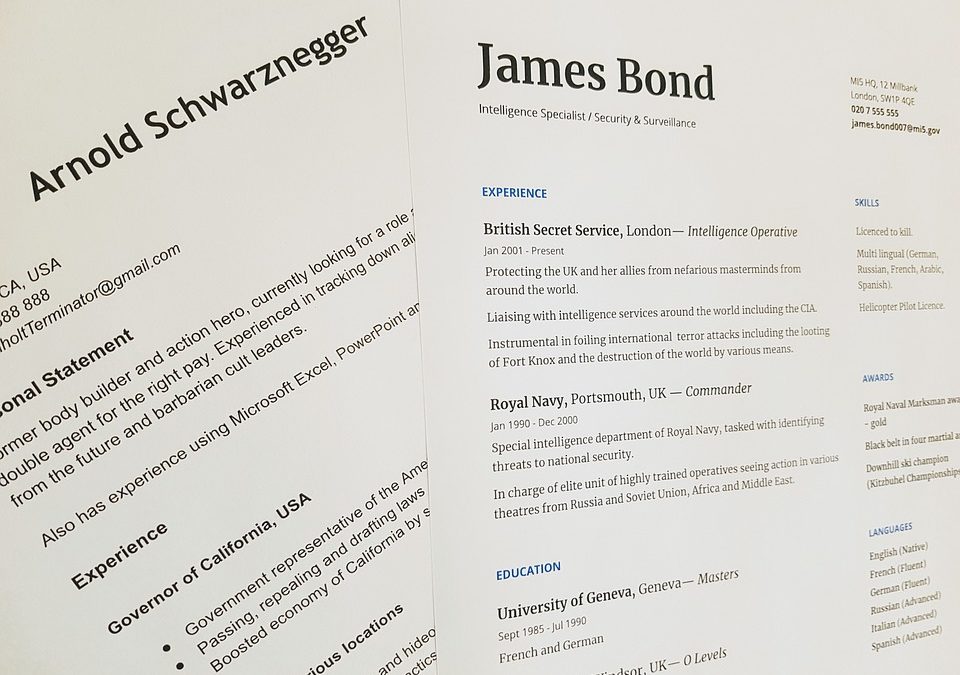
When writing your resume, keep it clean, clear and simple. Your prospective employer shouldn't have to riffle through pages or try to decipher your meaning. One clear page is better than several with unnecessary information. A clean resume is a pleasure to look at....

Interview edge? practice common questions
If you are looking to build your confidence before an interview, the surest way to feeling secure about what you'll say on the day is to practice. While you may not know exactly your interviewers will ask, there are common questions that come up again and again....

Presentation Tip 1: Practice out loud
Presenting your ideas effectively in the workplace is important, especially when delivering your views in a meeting. There are a number of steps you can take to build your confidence and improve your performance but simply practising OUT LOUD remains an effective...

The fundamental role of the team leader
When you take charge of a team, it is of paramount importance to understand member capabilities in relation to the project or team objectives. Once this is understood, its the role of the team leader to ensure that the conditions are set and implemented for utilizing...

Effective communication is a two way process
Many pitfalls can be avoided simply through improved communication between colleagues and stakeholders. A clear understanding of roles and expectations can help prevent unnecessary work and ensure that everyone is on the same page. In the healthcare sector, such...
Microsoft Word Tip 5: Add a Table of Contents
When preparing a paper, manual or report for work that involves more than one section to it, the addition of a ‘table of contents’ can help the reader get to exactly what they need. Including this roadmap also adds a polished quality to your work and can be done in a...

Microsoft Word Tip 4: Quick Charts
Visuals can make your report easier to understand and allow you to show off polished presentation skills at work. In earlier versions of Microsoft Word, you would need to link your word document to a separate Excel file to convert a simple list into a pie chart or...
Microsoft Word Tip 2: Built-in Save to PDF
There was a time when exporting your Word document to PDF required extra software that effectively pretended to be a printer. Those days are gone. Now transforming your word document file into a sleek and professional PDF can be done with three clicks of the mouse....