
Trick Or Treat! Come & Change Your Thoughts With Me!

It’s almost that time of year again! Boo! While many of you are eagerly awaiting a weekend Halloween party, putting the final touches on your child’s costume, or stocking up on candy, we thought we’d create a new tradition honoring one of our favorite holidays. We’d like to invite you to play the Halloween themed, made for adults, “Trick Or Treat” game!
A little history? The term “trick or treat” originated in the 1940s as a response to the traditional practice of pulling pranks on those refusing to hand out “treats” (i.e.: candy) on Halloween. It’s now commonplace to hear kids chant: “Trick or Treat, trick or treat, give me something good to eat!”
Ring a bell? Wink. It’s probably been a while.
The Contemporaries Team thought it would be a fun and constructive exercise to unpack and re-interpret the seasonal verbiage. Is it unsavory (a “trick”), or is it sweet (a “treat”)? It conjures a larger practice in mindfulness by assessing our emotional choices and correcting ourselves when our thoughts turn negative. You can spin them (just like a spider’s web!) into positive thoughts. There are a couple of ways to play. First, you can think of a “trick” simply as a negative feeling, i.e.: impatience, or frustration, and a “treat” as more optimistic (and hopefully wiser!) interpretation of that emotion. We’ve all been there — letting emotions cloud logic and judgement or reacting instead of responding.
This very well may happen when starting a new job. For example, it may be more entry level than you anticipated and so your ego is activated, and anger or resentment emerges. You may momentarily forget that it takes time to earn your stripes, or that no job is too small when just starting out.
Now, as fast as a witch on a broom arrives, the second stage of the game begins. This one takes hold of your imagination (which is perfect for this holiday!). Feel free to let loose with what a “trick” or “treat” is.
Maybe view a “trick” as a deception, i.e.: your mind playing a “trick” on you. Now try it’s counterpart – a “treat”. This reward could come by viewing that role you initially thought was beneath you as a valuable opportunity where you are “gaining meaningful experience” or “paying your dues” or “being a team player”. Who knows? Your boss just may notice your sparkling attitude and view you for bigger and more important tasks. So, find the silver-lining and don’t be afraid to go with the flow a bit. Try thinking of a “treat” as not only a reward for your own self-improvement and character growth but something that you may claim by approaching a negative situation with a more positive mindset.
Here are some examples we conjured up to help get you in the right mindset:
- Trick: Arrogance, Treat: Confidence
- Trick: Ego, Treat: Humility
- Trick: Jealousy, Treat: Radical Acceptance/Encouragement
- Trick: Judgement, Treat: Positive Evaluation
- Trick: Impatience, Treat: Mindfulness
- Trick: Greed, Treat: Gratitude
And now, for Part 2:
- Trick: Tedious job tasks, Treat: Invaluable Work Experience (you may surprise yourself!)
- Trick: Feeling overworked, Treat: A bonus, or acknowledgement from your boss
- Trick: A difficult co-worker, Treat: Learning lifelong interpersonal skills
- Or it can be as small as:
- Trick: Repetitive, mundane office jobs (i.e.: copying) Treat: A Meditative Experience
Okay, now you try! It can take a bit to get going. But that’s fine. An accomplished feeling can often be worth the trial and error and temporary challenge.
So, allow yourself to think back to that one health conscious neighbor who handed out raisins instead of M&Ms. As a kid it’s more than natural to be disappointed and think, “They’re not even covered in chocolate! Who hands out healthy snacks on Halloween?”
But with aging can come (let’s hope!) perspective. Maybe instead (and remind yourself and your kids, that without those raisins (or apple slices!) the other candy wouldn’t taste as sweet. Sure, it may appear “corny” (who else loves candy corn?), but more and more research proves that changing those negative “tapes in your head” is something to commit to. Start by identifying a negative emotion and alchemizing it (how witchy!) into a more constructive, productive, and positive emotion.
Your mind, body, and soul could very well reward you! And, maybe besides happiness and fulfillment, there will be other compensations too – a promotion, or acknowledgement of a job well done.
The small choices you make every day can really impact your mentality, which can lead to more success in your personal and professional life. Now, go get your Halloween on! Carve a pumpkin, eat your favorite childhood treat, and don’t forget to hit a costume store (or your local drugstore) before all the vampire fangs, tiaras, and Reese’s are gone. And when a pushy kid may grab too much from your bowl, or your frenemy is wearing the same costume as you, pause for a moment and think: Trick, or Treat?
This posting is brought to you by Contemporaries Inc., one of the best temp agencies in Boston MA. Also available for payrolling employees in Boston and Greater Boston
Recent Posts

The Selfless Spirit
Ambition can be a great motivator but your actual actions should not be based on personal gain in the workplace, rather with a selflessness that moves the team and organization forward. This constructive quality over one's ego is one that distinguishes a responsible...

The Team Comes First
Sayings like 'the customer is always right' or 'first' may be rooted in the positive goal of satisfying the customer, but your team should come first. Dede Henley observes in her Forbes article on inspiring teams that "it’s common sense, isn’t it? Fight for your...

Asking the Right Questions: “How might we…”
The way questions are framed can encourage constructive ideas from your team. In a Forbes article on inspiring teams, Dede Henley suggests that starting the questions with, "How might we..." rather can "How do we..." can draw out questions "that get people to expand...

Constructively handle Concerns
There are always reasons to have concerns about a project. In fact, professional project managers will often formally divide these concerns into risk and uncertainty. Some risks can be managed by tracking them and preparing for them. For instance, if your project...

Feeling good on the job starts at home with a good nights rest
Feeling good on the job starts at home with a good nights rest. According to the National Sleep Foundation, "those with excellent sleep health are nearly 3.5 times more likely to report feeling well-rested on a typical weekday than those with poor sleep health." ...

Productivity is a Process
Even when you have effective methods for getting work done, the process of being more productive is an ongoing one. It may be tempting to fall into an "if it ain't broke don't fix it” mindset, but there are usually better ways of doing things. Many simply require...
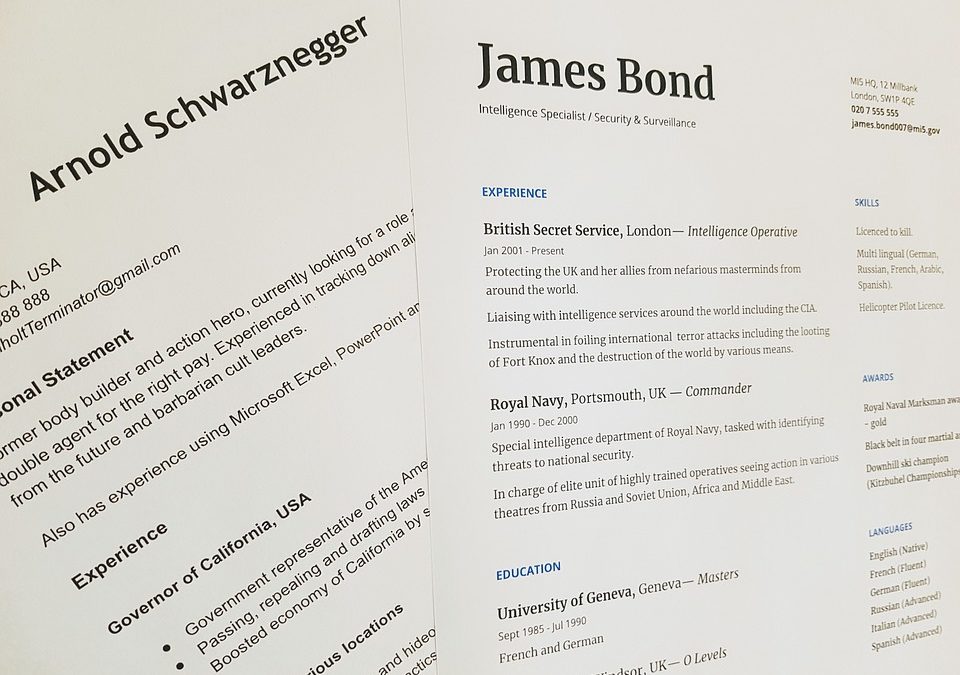
Resume Tips: Keep it Clean, Clear & Simple
When writing your resume, keep it clean, clear and simple. Your prospective employer shouldn't have to riffle through pages or try to decipher your meaning. One clear page is better than several with unnecessary information. A clean resume is a pleasure to look at....

Interview edge? practice common questions
If you are looking to build your confidence before an interview, the surest way to feeling secure about what you'll say on the day is to practice. While you may not know exactly your interviewers will ask, there are common questions that come up again and again....

Presentation Tip 1: Practice out loud
Presenting your ideas effectively in the workplace is important, especially when delivering your views in a meeting. There are a number of steps you can take to build your confidence and improve your performance but simply practising OUT LOUD remains an effective...

The fundamental role of the team leader
When you take charge of a team, it is of paramount importance to understand member capabilities in relation to the project or team objectives. Once this is understood, its the role of the team leader to ensure that the conditions are set and implemented for utilizing...

Effective communication is a two way process
Many pitfalls can be avoided simply through improved communication between colleagues and stakeholders. A clear understanding of roles and expectations can help prevent unnecessary work and ensure that everyone is on the same page. In the healthcare sector, such...
Microsoft Word Tip 5: Add a Table of Contents
When preparing a paper, manual or report for work that involves more than one section to it, the addition of a ‘table of contents’ can help the reader get to exactly what they need. Including this roadmap also adds a polished quality to your work and can be done in a...
Microsoft Word Tip 4: Quick Charts
Visuals can make your report easier to understand and allow you to show off polished presentation skills at work. In earlier versions of Microsoft Word, you would need to link your word document to a separate Excel file to convert a simple list into a pie chart or...
Microsoft Word Tip 2: Built-in Save to PDF
There was a time when exporting your Word document to PDF required extra software that effectively pretended to be a printer. Those days are gone. Now transforming your word document file into a sleek and professional PDF can be done with three clicks of the mouse....